.avif)
Jack Henry & Associates publicly disclosed a cybersecurity incident on August 31, 2026, and the immediate question for many financial institutions is simple: did this affect core banking or client-facing processing? According to Jack Henry’s incident statement, the incident affected a limited portion of its internal, non-production corporate environment, while client-facing systems, core platforms, daily processing services, and operating systems were not accessed or disrupted.
If your bank or credit union needs help translating this event into documented vendor-risk, incident-response, or audit actions, contact NETBankAudit with your questions.

What Happened in the Jack Henry Cybersecurity Incident?
Jack Henry said the incident began with a sophisticated vishing attack, meaning voice-based social engineering. The company identified the threat actor as ShinyHunters. It also said its security controls detected and rapidly contained the activity.
The company engaged an independent cyber-forensics firm and is cooperating with federal law enforcement. Jack Henry also confirmed that the incident involved an extortion attempt and stated that it would not pay the threat actor. The company said it determined the event was not financially material to the company.
For banks and credit unions, the important starting point is to separate confirmed facts from speculation. Based on Jack Henry’s investigation to date, the public record supports the following:
- More than 7,200 Jack Henry clients were notified that an incident occurred.
- PII associated with fewer than 10 clients was affected.
- Jack Henry is offering two years of credit monitoring for impacted accountholders through affected institutions.
- Jack Henry said no system outages occurred.
- Jack Henry said client-facing systems, core platforms, and daily processing services were not accessed or disrupted.
- The incident is still developing, so institutions should monitor for updated forensic information.
Do not assume this was a core banking breach
Searches for “Jack Henry breach,” “JHA cyberattack,” and “Jack Henry data breach” are understandable. Still, wording matters. Current public information does not support claims that Jack Henry’s core banking platform was breached or that all Jack Henry clients had data exposed.
A better framing is that Jack Henry reported a cybersecurity incident involving part of its internal corporate environment, with PII associated with fewer than 10 clients affected. That distinction is critical for management reporting, board updates, vendor files, examiner discussions, and customer communications.
Was Jack Henry’s Core Banking Platform Breached?
Based on Jack Henry’s public statement, the answer is no. Jack Henry said no client-facing systems, operating systems, core platforms, or daily processing services were accessed or disrupted. The company also said it experienced no system outages.
That does not make the event irrelevant to banks and credit unions. It means the response should be disciplined rather than reactive. A critical technology provider reported a cyber incident, and regulated financial institutions need to show that they evaluated whether the event affected their data, operations, reporting duties, and vendor-risk profile.
What should management say internally?
Internal messaging should be factual and limited to what is known. A practical management update might state that Jack Henry disclosed a cybersecurity incident affecting a limited internal, non-production corporate environment, that Jack Henry says core and client-facing systems were not accessed or disrupted, and that the institution is assessing whether its information was involved.
Avoid statements such as “we were breached” unless your institution has facts supporting that statement. Also avoid saying “only 10 people were affected.” Jack Henry said PII associated with fewer than 10 client institutions was impacted, not fewer than 10 individuals.
Was Customer or Accountholder Data Exposed?
Jack Henry said personally identifiable information associated with fewer than 10 clients was impacted. The number of affected accountholders, the specific data elements, the exposure period, and the specific repositories involved have not been publicly disclosed by Jack Henry as of September 1, 2026.
That uncertainty matters. If your institution receives notice that it is one of the affected clients, your response should move from general vendor monitoring to institution-specific incident response. That may include determining the data elements involved, whether misuse is reasonably possible, which notification rules apply, and who will issue required notices.
Credit monitoring does not replace institutional review
Jack Henry is offering two years of credit monitoring for impacted institutions to provide to affected accountholders. That is helpful, but it does not answer every compliance question. Your institution still needs to determine whether its own policies, contracts, regulatory status, and customer-notification obligations require additional action.
For institutions not identified as affected, the better response is not to assume exposure. The better response is to retain the vendor notice, document the review, monitor for updates, and confirm whether Jack Henry has stated that your institution’s data was not involved.
Why the Vishing Detail Matters for Financial Institutions
The vishing detail deserves special attention because it points to the human and identity side of cybersecurity. In a vishing attack, the attacker manipulates a person through a phone call or voice interaction rather than relying only on malware or a software flaw. That makes help-desk, identity-administration, and employee-verification controls especially important.
Financial-sector breach data reinforces the point. Verizon’s DBIR summary states that, within its Financial and Insurance sector dataset, 65% of breaches involved the human element and 34% involved a third party. The Jack Henry incident includes both themes: social engineering and vendor exposure.
Threat-actor context should not be treated as a forensic report on Jack Henry. Mandiant’s defensive guidance discusses ShinyHunters-branded data theft activity involving social engineering, valid credentials, SaaS access, identity changes, and extortion, but Jack Henry has not publicly confirmed the full attack chain in this incident.
Still, banks and credit unions can use the reported attack method as a reason to review controls that are often targeted in voice-based social engineering. These reviews should be risk-based, documented, and tied to your institution’s own environment. Start with the workflows where an attacker could turn a persuasive phone call into access:
- Identity verification for password resets.
- Controls around MFA resets and re-enrollment.
- Device enrollment and account recovery procedures.
- Help-desk callback and out-of-band verification steps.
- Privileged-access changes and emergency access workflows.
- Logging for authentication changes, SaaS activity, and unusual data exports.
- Security-awareness training that includes vendor impersonation, phone calls, SMS, and fake IT-support scenarios.
Why Banks Should Treat This as a Third-Party Risk Event
Even when a vendor says production services were not disrupted, a cyber incident at a critical technology provider belongs in the third-party risk-management process. This is not about assigning Jack Henry a universal high, moderate, or low risk rating from public news. It is about showing that your ongoing monitoring process functioned.
Federal banking agencies emphasize that community banks should manage third-party relationships across the lifecycle, including planning, due diligence, contract negotiation, ongoing monitoring, and termination. The agencies’ community bank guide also recognizes that third-party relationships can provide valuable technology and expertise while introducing operational, compliance, financial, and strategic risks.
For a community bank, regional bank, or credit union, Jack Henry may be a significant or critical provider. If so, a public cyber incident should trigger a documented review within the vendor-management file. That review may ultimately determine that no operational impact occurred and no institution data was involved.
That still has value. Examiners and auditors often care less about whether a risk score moved by one point and more about whether management identified the issue, evaluated relevance, escalated appropriately, and maintained evidence.
What Jack Henry Clients Should Review Now
A calm response still requires action. The right level of action depends on whether your institution was affected, what your contract requires, which regulator supervises the institution, what data was involved, and what your own policies say. The following checklist is intended to help management organize the review, not to create a one-size-fits-all requirement.
Begin by assigning ownership. Vendor management, information security, compliance, legal, operations, and executive management may all have roles. The objective is to create a defensible record showing that the institution understood the event and responded in a risk-based manner.
Documentation is especially important while the investigation is still developing. If new facts emerge, your institution should be able to show what was known at each stage, what decisions were made, and when follow-up was scheduled. Consider these practical steps:
- Retain Jack Henry’s original notification and any follow-up communications.
- Confirm whether your institution is among the fewer than 10 clients whose PII was affected.
- If affected, request the specific data elements, number of accountholders, exposure period, and systems or repositories involved.
- Review relevant contract provisions for notice, cooperation, confidentiality, audit rights, evidence, and remediation information.
- Determine whether the matter should be escalated to senior management, the board, or a risk committee under internal policy.
- Evaluate whether regulatory, customer, state breach-notification, or law-enforcement communication obligations apply.
- Update the vendor file with the incident review, risk determination, and unresolved questions.
- Request updated assurance information when available, such as incident summaries, SOC-related updates, or corrective-action information.
- Set a follow-up date so the matter does not remain open indefinitely or disappear before final facts are available.
- Review internal controls related to vishing, help-desk verification, MFA changes, device enrollment, and privileged access.
Keep the vendor file audit-ready
The vendor file should tell the story without relying on memory. A reviewer should be able to see the notice, understand the institution’s impact analysis, identify who was informed, and follow the status of unresolved requests. If the institution was not affected, document how that determination was made.
If the institution was affected, the file should also support data-impact and notification decisions. That may include counsel involvement, management approvals, customer-notice drafts, credit-monitoring coordination, and any vendor commitments regarding remediation.
Does the Incident Need to Be Reported to Regulators?
Do not assume that every Jack Henry client has a regulatory reporting obligation simply because Jack Henry sent a general incident notice. Reporting depends on the facts and the applicable regulatory standard. The key question is whether your institution experienced, or reasonably believes it experienced, a qualifying reportable incident.
For covered banking organizations, the federal 36-hour rule requires notification to the primary federal regulator as soon as possible and no later than 36 hours after determining that a qualifying notification incident occurred. The same rule includes a bank service-provider notice provision tied to certain covered service disruptions of four or more hours.
The Jack Henry caveat is important. Jack Henry said no core platforms, client-facing systems, daily processing services, or other identified services were disrupted, and it said there were no outages. Those facts do not support a blanket statement that the bank service-provider disruption provision was triggered.
Credit unions should evaluate the NCUA standard separately
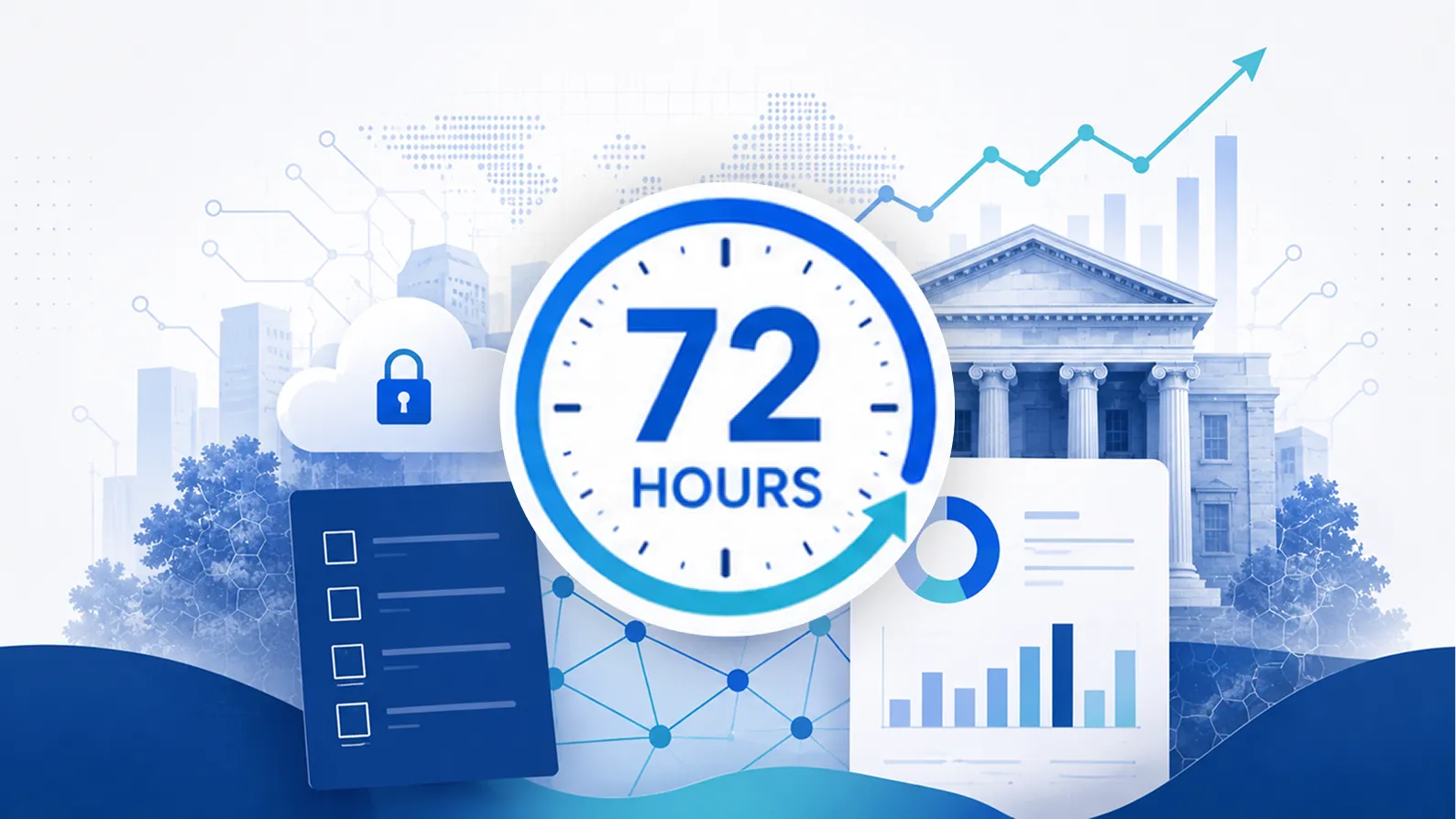
Federally insured credit unions have a separate cyber-incident notification rule. NCUA’s 72-hour guidance addresses reportable cyber incidents, including certain incidents involving third-party service providers, cloud service providers, data-hosting providers, and supply-chain compromises.
That does not mean every Jack Henry credit-union client must notify NCUA. A credit union should evaluate whether it reasonably believes it experienced a reportable cyber incident, including whether sensitive data or business operations were compromised or disrupted through the third party. The determination should be documented.
What Auditors and Examiners May Expect to See
Auditors and examiners generally do not expect perfection during a developing vendor incident. They do expect governance. For a critical provider event, the institution should be able to demonstrate awareness, escalation, analysis, and follow-up.
The record should be clear enough for someone outside the response team to understand. It should show what the vendor said, what the institution did, and why management reached its determination. It should also show that unresolved questions are being tracked.
A useful audit trail may include the following records. Not every item applies to every institution, but these are common evidence points when vendor cyber events intersect with incident response and third-party risk management. Treat the list as a planning tool for your internal file:
- Original vendor notice and follow-up communications.
- Vendor-management ticket, issue record, or incident log entry.
- Management review notes and assigned ownership.
- Impact determination for systems, operations, and customer data.
- Contract review notes related to notification and cooperation duties.
- Regulatory reporting analysis and final determination.
- Customer-notification analysis, if customer information was involved.
- Board, committee, or senior-management reporting, when appropriate.
- Requests to Jack Henry for forensic, assurance, or corrective-action information.
- Follow-up dates, closure notes, or continued monitoring documentation.
Security Lessons Banks Can Apply Internally
The Jack Henry cybersecurity incident is also a reminder that vendor incidents can reveal internal control questions. A bank may not control a provider’s corporate environment, but it can control its own help-desk verification, identity administration, employee training, monitoring, and incident playbooks.
Vishing should be included in security-awareness testing and tabletop exercises. Employees should understand that attackers may impersonate IT staff, vendors, executives, regulators, or support personnel. Help-desk teams should know when to slow down, verify identity, and escalate suspicious requests.
Identity controls deserve board-level visibility
Boards and risk committees do not need every technical detail. They do need to understand whether the institution has controls around high-risk identity events. Password resets, MFA changes, new device enrollment, privileged access, remote support, and SaaS administration can become attack paths when social engineering succeeds.
Management should also review whether logs can answer practical questions. Who changed an MFA method? Was a new device enrolled? Was a session revoked? Were large exports performed? Could the institution reconstruct activity quickly if a vendor, employee, or examiner asked?
Need Help Turning Vendor Cyber News Into Audit-Ready Action?
The Jack Henry incident currently appears contained outside core banking and client-facing production services, according to the company. For banks and credit unions, the larger lesson is that third-party risk management must operate after onboarding, not only during vendor selection.
NETBankAudit helps financial institutions connect cybersecurity, vendor management, incident response, regulatory compliance, and audit evidence. Our team includes experienced auditors and security professionals with financial-institution, regulatory, and technical backgrounds. We support IT general controls audits, vendor management reviews, cybersecurity controls evaluations, incident-response assessments, social engineering testing, penetration testing, and audit-readiness support.
If your institution needs assistance reviewing the Jack Henry incident, strengthening vishing defenses, updating vendor-risk documentation, or preparing evidence for auditors and examiners, contact NETBankAudit. We can help you turn a developing third-party cyber event into a practical, documented, and regulator-aware response.
%201%20(1).svg)
%201.svg)

.svg)




%201.webp)



.webp)
%20(1).webp)

.webp)

.webp)
.webp)
.png)
.webp)

.webp)




.webp)


.webp)

%201.webp)
.webp)
%20(3).webp)


.webp)


%20Works.webp)

.webp)


.webp)
%20(1).webp)

.webp)


.webp)
.webp)

.webp)
.webp)
.webp)
.webp)
.webp)
.webp)
%201.svg)