.avif)
Agentic AI is moving from experimentation into banking operations. Fiserv announced the May 14, 2026 launch of agentOS, an agentic AI operating system designed to help banks and credit unions deploy, manage, and scale AI agents across banking workflows. For compliance and cybersecurity professionals, the core issue is whether the institution can govern what agents access, decide, trigger, route, document, and escalate.
NETBankAudit works with financial institutions on audit, cybersecurity, third-party risk, compliance, and BSA/AML readiness. If you have questions about agentic AI controls after reading this guide, please reach out to our team.
Fiserv agentOS Signals a Shift From AI Pilots to AI Operations
Fiserv is positioning agentOS as a governed layer for agentic AI across its core, payments, issuer processing, and servicing platforms. The announcement matters because many financial institutions may encounter agentic AI through existing vendors before they build mature internal AI programs.
Fiserv says six financial institutions are co-developing agentOS, two are running beta agents, and wider availability is expected by August 2026. It also says the agentOS Marketplace will let institutions use Fiserv-built agents, build their own agents, or deploy third-party agents within a controlled architecture.
That marketplace model creates opportunity and risk at the same time. Banks may gain faster access to workflow automation, but every agent also raises questions about data access, identity, human approval, vendor oversight, and audit evidence. The first agentOS use cases show why compliance and cybersecurity teams should be involved early.
- Commercial Loan Onboarding: Fiserv identifies this as one of the initial agents, with First Interstate reporting early results from automating loan onboarding directly to the Fiserv core.
- Daily Operational Analysis and Reporting: Boulder Dam Credit Union reported using this agent to automate manual reporting tasks, including reducing report times from 10 minutes to seconds.
- Agentic Deposit Intelligence: This agent raises governance questions around customer segmentation, privacy, profiling, deposit analytics, and marketing controls.
- Agentic AML Triage Analysis: This use case may support evidence gathering and alert triage, while trained analysts remain responsible for critical judgment.
The operational benefits above are based on Fiserv’s announcement where specifically stated. The compliance and cybersecurity concerns discussed here are risk implications that financial institutions should evaluate before deployment. Vendor positioning around governance, identity, auditability, and human oversight should be validated through due diligence and testing.

What Makes Agentic AI Different From a Chatbot?
Traditional generative AI often responds to a prompt, summarizes a document, drafts text, or analyzes information. Agentic AI is different because it may be assigned a goal, plan steps, call tools, retrieve data, interact with systems, and move a workflow forward.
For a bank, that distinction changes the control environment. A chatbot may produce a wrong answer. An agent may access customer data, call an API, draft a customer communication, assemble an AML case file, or route an exception for approval.
The audit question changes
With a drafting assistant, reviewers may ask, “What output did the model produce?” With an AI agent, auditors and examiners may need to ask a longer set of questions: What did the agent see, which data did it retrieve, which tools did it call, what action did it recommend, who approved it, and what evidence was retained?
That makes agentic AI closer to a permissioned digital worker than a simple productivity tool. Compliance teams should focus on workflow boundaries. Cybersecurity teams should focus on identity, access, monitoring, data leakage, prompt injection, and the ability to disable agents quickly when something goes wrong.
Regulatory Signals: Innovation Is Possible, But Governance Is Not Optional
The Spring 2026 Semiannual Risk Perspective says banks are taking a measured approach to genAI and agentic AI, generally limiting usage to specific use cases with guardrails and human-in-the-loop accountability. The OCC also notes that these technologies may expand into core operations, customer service, and material financial decisions.
That regulatory framing is important. It does not mean regulators have approved agentic AI in banking. It means banks should evaluate AI use in a safe, sound, lawful, and risk-based manner, especially where customer impact, compliance obligations, cybersecurity exposure, or operational resilience are involved.
The OCC identifies unique challenges for genAI and agentic AI, including explainability, data privacy, data poisoning, cybersecurity threats, and validation challenges. Those risks should be reflected in the institution’s AI policy, risk assessment process, change management program, and internal audit plan.
The OCC said the model risk guidance is most relevant to banks over $30 billion, while it may still be relevant to smaller banks with significant model risk exposure. The same 2026 revised guidance excludes genAI and agentic AI from scope because they are novel and rapidly evolving. That exclusion does not remove the need for AI governance, testing, monitoring, or documentation.
Compliance Risks: Lending, AML, Deposits, Disputes, and Customer Service
Agentic AI can support useful banking workflows. It may reduce manual evidence gathering, speed triage, improve reporting, and help staff focus on higher-risk exceptions. The compliance risk depends on the workflow, the data involved, and whether the agent influences customer-impacting decisions.
A low-risk reporting assistant is not the same as an agent that touches lending, disputes, fraud restrictions, or AML triage. The more an agent affects customers, regulated decisions, or legal deadlines, the stronger the controls should be. Compliance professionals should map each use case before deployment.
The following areas deserve close review because they connect directly to existing compliance obligations. Each should have a business owner, a risk tier, defined human approval points, documented testing, and retained evidence. Institutions should avoid treating all agents as a single technology category.
- Lending: If an agent influences underwriting, prioritization, pricing, credit terms, or adverse action drafting, fair lending and ECOA controls become central. The Circular 2022-03 adverse action requirements make clear that creditors using complex algorithms still must provide specific principal reasons for adverse action.
- AML and financial crimes: Agents may support transaction review, evidence collection, typology mapping, and case prioritization. They should not suppress alerts, close investigations, or produce SAR filing recommendations without defined analyst review, escalation controls, and retained rationale.
- Deposit intelligence and marketing: Agents that analyze customer behavior, product opportunities, or retention indicators should be reviewed for privacy, UDAAP, fairness, customer segmentation, and data minimization concerns.
- Dispute management: Agents that help gather evidence or draft correspondence must preserve timing, documentation, escalation, and decision traceability for error resolution workflows.
- Customer service: Customer-facing or support agents can create risk through inaccurate statements, weak authentication, missed complaints, poor escalation, or misleading communications.
Cybersecurity Risks: Agents Expand the Attack Surface
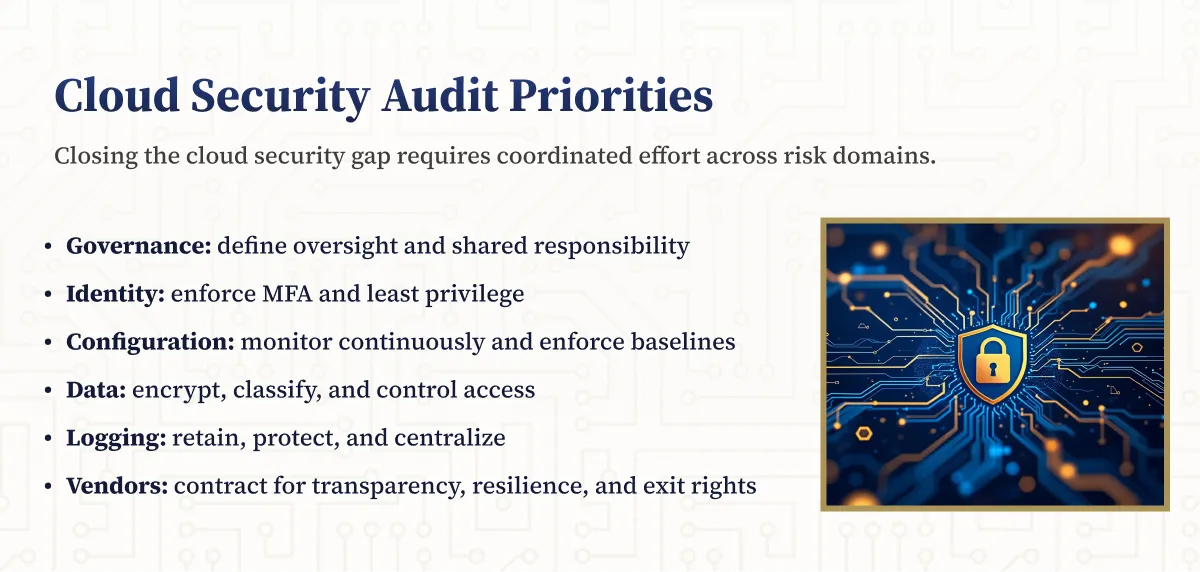
Agentic AI introduces cyber risk because agents may be connected to tools, data sources, APIs, browsers, code interpreters, internal systems, and external content. The more tools an agent can call, the more important identity, least privilege, logging, and real-time monitoring become.
Deloitte identified more than 350 risks that can arise from autonomous or agentic behavior. For financial institutions, that risk set includes prompt injection, data leakage, tool misuse, runaway execution, excessive permission, and multi-agent error propagation.
Prompt injection is especially important for banking agents. A malicious instruction hidden in an email, uploaded document, web page, customer message, or third-party record may influence how the agent behaves. If the agent can call tools, the result may be more serious than a bad answer.
Data poisoning is another concern. If training data, retrieval sources, reference data, or workflow inputs are manipulated, the agent’s outputs and actions may be distorted. Banks should treat external and customer-provided content as untrusted until it has passed appropriate controls.
The October 2024 NYDFS industry letter warned that AI-enabled deepfakes can increase phishing, vishing, smishing, videoconferencing fraud, credential theft, unauthorized fund transfers, and attempts to bypass biometric verification. Agentic AI incident response plans should reflect those threat paths.
Multi-agent risk deserves early attention
Agentic AI risk also increases when multiple agents interact. A single bad output can become another agent’s input, creating cascading errors across workflows. Agents may duplicate work, omit steps, contradict each other, or escalate a false signal through connected systems.
That makes monitoring, scoped permissions, workflow boundaries, and human escalation especially important as institutions move from isolated agents to agent ecosystems. Cybersecurity teams should also confirm that the institution can disable one agent, a class of agents, a tool integration, or an external connection during an incident.
Control Matrix for Agentic AI Audit Readiness
Compliance and cybersecurity teams need a scan-friendly way to translate agentic AI risk into control evidence. A control matrix can help business owners understand what must be documented before production use. It can also help internal audit, vendor management, and management committees identify gaps before an examination or incident.
Third-Party Risk: One Agent May Depend on Many Providers
The agentOS model highlights a broader third-party risk issue. An agentic AI workflow may involve a core or platform vendor, a cloud provider, a model provider, marketplace agents, subprocessors, bank-built prompts, external tools, and bank data sources.
Interagency third-party risk guidance makes clear that using third parties does not remove a bank’s responsibility to conduct activities safely, soundly, and in compliance with applicable laws. That principle applies directly to agentic AI deployments.
Vendor management teams should understand which agents are Fiserv-built, bank-built, third-party, marketplace-provided, or supported by a model provider. They should also know what each party can access, what is logged, what data is retained, and whether bank data is used to train or improve models.
Contract and oversight terms need AI-specific detail
Contracts and due diligence should address audit rights, incident notification, subcontractor transparency, data use limits, model or workflow change notices, business continuity, termination, and log preservation. For higher-risk agents, ongoing monitoring should include independent review, access testing, sample testing, and evidence that controls continue to operate as intended.
Questions to Ask Before Deploying AI Agents
Financial institutions do not need to block agentic AI to manage it responsibly. They do need a disciplined intake and approval process before agents move into production. The questions should be practical enough for business owners, compliance, cybersecurity, vendor management, and internal audit to use together.
Start by identifying the workflow and the decision points. Then identify the data, tools, vendors, and human approvals involved. Finally, confirm whether the institution can reconstruct what happened for a sampled case during an audit, complaint review, incident, or examination.
These questions can help shape an initial readiness review. They should be tailored based on the agent’s autonomy, customer impact, compliance impact, data sensitivity, and system access. Higher-risk use cases should receive stronger testing and approval requirements.
- What agents are available, piloted, deployed, disabled, or planned?
- What business process does each agent support, and is it customer-impacting, financially material, compliance-impacting, or operationally critical?
- What data sources can the agent access, including core, payments, AML, fraud, loan, deposit, document, email, web, or customer service data?
- Can the agent access nonpublic personal information, SAR-related information, account data, transaction data, or confidential business data?
- Can the agent take actions, or does it only make recommendations?
- Which actions require human approval before execution?
- Does the agent operate under its own identity, a user identity, a service account, or a shared credential?
- What logs are captured, including prompts, retrieved data, tool calls, outputs, approvals, overrides, exceptions, and final decisions?
- Can internal audit reconstruct the agent’s decision path for a sampled case?
- Can the bank immediately disable one agent, all agents, or specific tool access during an incident?
Preparing for Agentic AI Audits and Reviews
Audit readiness starts with inventory. Banks should maintain a list of agents by use case, owner, vendor, model provider, data sources, permissions, risk tier, approval status, and deployment date. Without that inventory, it is difficult to assess risk or prove control coverage.
Testing should occur before deployment and after material changes. That testing should cover performance, workflow accuracy, prompt injection, data leakage, access control, tool misuse, human approval gates, bias where relevant, and fallback procedures if the agent or provider fails.
Evidence matters. Institutions should retain policies, risk assessments, approvals, data maps, access reviews, testing records, vendor evidence, monitoring reports, incident response procedures, training records, and independent review results. The goal is to show what the agent was allowed to do, what it actually did, and how humans governed the outcome.
Selected Source Base for This Article
This article was developed from the Fiserv agentOS launch announcement, the OCC Spring 2026 Semiannual Risk Perspective, OCC Bulletin 2026-13 on model risk management, CFPB Circular 2022-03 on adverse action and complex algorithms, interagency third-party risk guidance, Deloitte’s agentic AI banking risk analysis, and the NYDFS industry letter on AI cybersecurity risks. Those sources were used to keep the discussion grounded in vendor facts, regulator expectations, and practical control evidence.
How NETBankAudit Can Help Financial Institutions Govern Agentic AI
Agentic AI may help banks and credit unions improve operations, AML triage, reporting, customer service, and back-office workflows. It also requires a control environment that addresses compliance, cybersecurity, vendor management, auditability, and business continuity before deployment.
NETBankAudit can support financial institutions through AI governance reviews, IT audits, cybersecurity assessments, third-party risk reviews, BSA/AML audit work, compliance reviews, and business continuity testing tied to agentic AI workflows. If your institution is evaluating Fiserv agentOS or similar agentic AI platforms, contact NETBankAudit to discuss how your controls, evidence, and audit readiness should evolve.
%201%20(1).svg)
%201.svg)

.svg)


%201.webp)



.webp)
%20(1).webp)

.webp)

.webp)
.webp)
.png)
.webp)

.webp)



.webp)


.webp)

%201.webp)
.webp)
%20(3).webp)


.webp)


%20Works.webp)

.webp)


.webp)
%20(1).webp)

.webp)


.webp)
.webp)

.webp)
.webp)
.webp)
.webp)
.webp)
.webp)
%201.svg)